
Sensor Sweep: Robert E. Howard, C. L. Moore, TSR

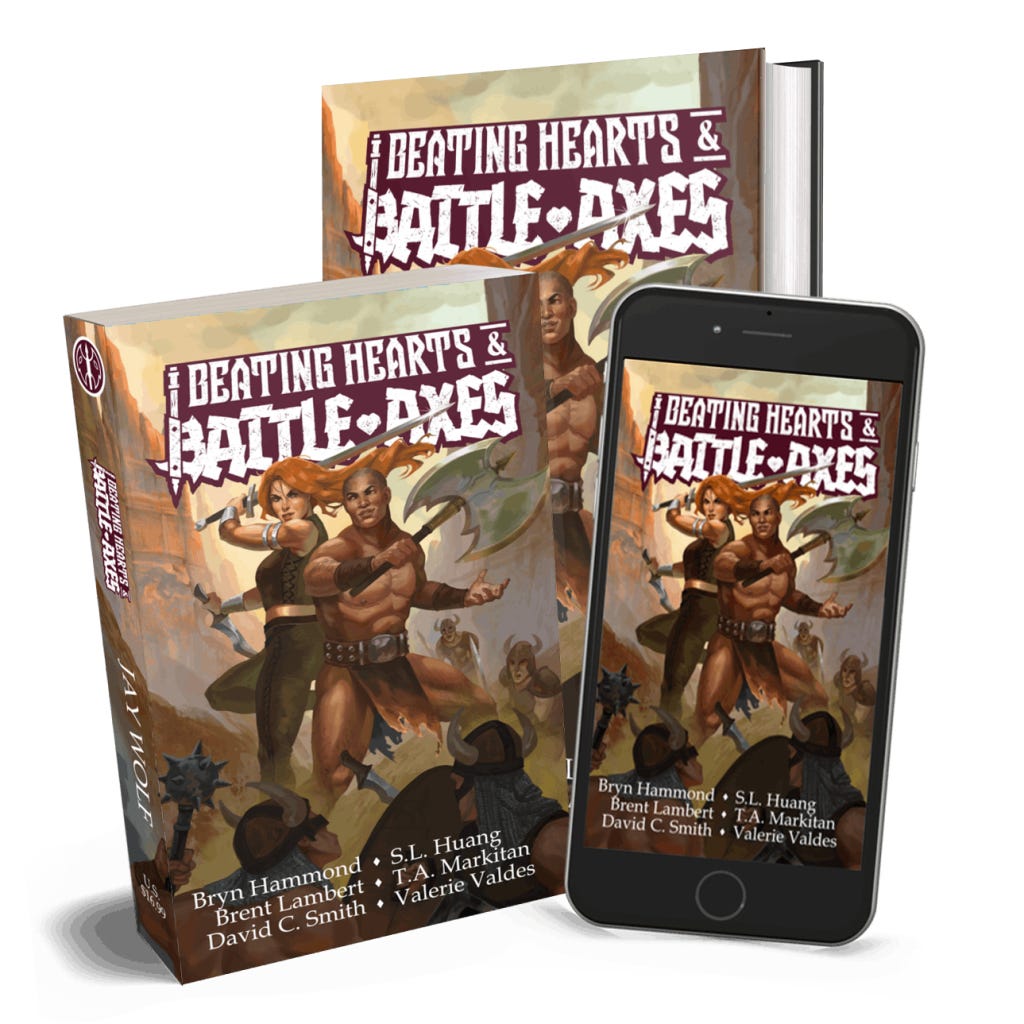
Review (Sprague de Camp fan): I didn’t care for this story at all. There was nothing to hook me. The main character was unlikeable and had no discernable value to the story until the end. The main character, Dorial, just whined and bitched about EVERYTHING. He was a wimp.
RPG (Isegoria): Ken “Whit” Whitman explains how he learned TSR was dying: A lot of people ask me: “If you were just the Gen Con coordinator, how do you know so much about TSR’s internal strategy?” Fair question. Here’s a little story that might give me some legitimacy.
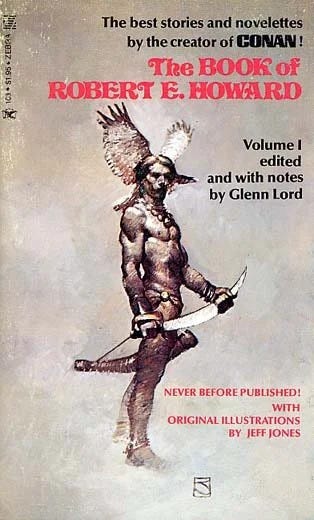
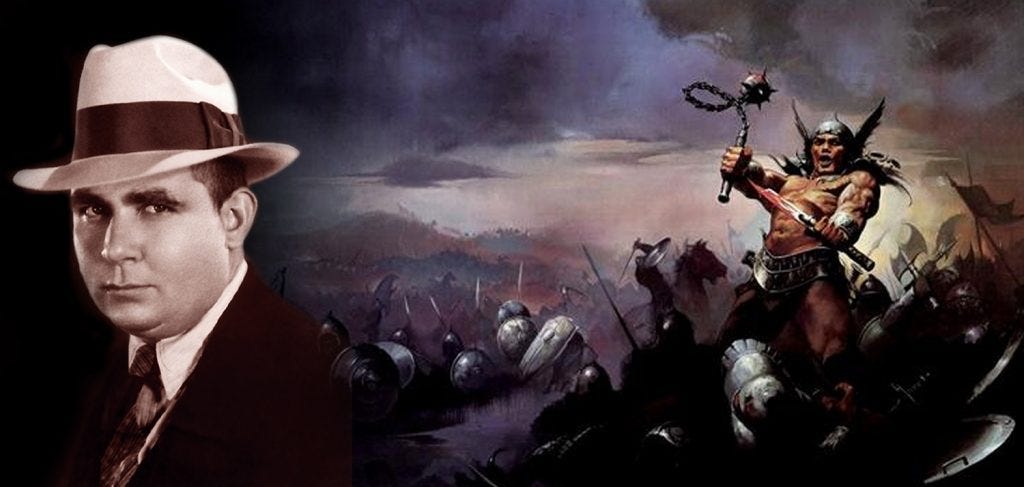
Robert E. Howard (DMR Books): Today marks the one hundred and twentieth anniversary of Robert E. Howard’s birth. This year, 2026, also marks the ninetieth anniversary of Howard’s death. Thirty years and change. A little over ten years of that comprised his career as a published author. However, that decade changed the literary world…and changed my life in particular.
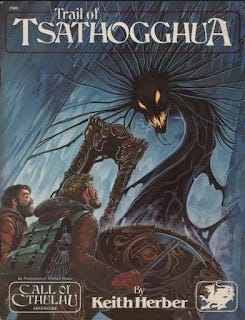
Games (Grognardia): Trail of Tsathoggua is a 64-page book, featuring a terrific cover by Steve Purcell, an artist who, in his later career, would work for LucasArts, Nelvana, and Pixar. The book consists of three adventures, the first two of which are loosely connected to one another, while the third stands on its own and is, by far, the best of the trio – and indeed widely regarded as one of the best Call of Cthulhu scenarios of its early years.
Games (Sargon of Akkad): The Femstodes Have Arrived! Akkad Daily examines the recent reveal of new Legio Custodes miniatures. This video analyzes the designs, sparking discussion on their implications for the Warhammer universe and fanbase.
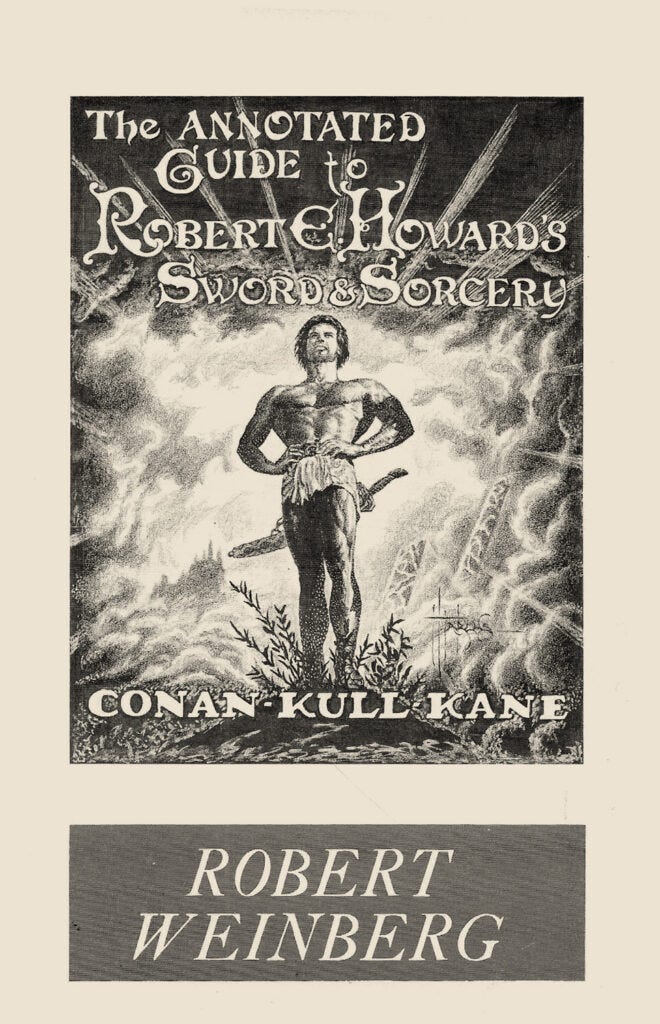
Robert E. Howard (Pulp Super Fan): When I did a posting on Fred Blosser‘s guides to Robert E. Howard‘s writing, I noted that his The Annotated Guide to Robert E. Howard’s Weird Fiction was originally written in the 1970s to be a companion to Robert E. Weinberg‘s The Annotated Guide to Robert E. Howard’s Sword & Sorcery, which was published in 1976 through Starmont Books.

Cinema (Glitternight): RIN TIN TIN (1918-1932) – Here at Balladeer’s Blog, I’m even fonder of dogs than I am of silent movies, so this post will combine the two topics. Sadly, most silent films have become so little remembered that few people even realize that there actually WAS a real Rin Tin Tin, adopted by American soldiers during World War One.
Tolkien (Spear of Heaven): ohn Ronald Reuel Tolkien was born in 1892 in South Africa, moved to England when he was three and spent the bulk of his childhood in the countryside around Birmingham. Both his parents died when he was young, and his mother named a close friend of hers who was also a Catholic priest has his guardian.
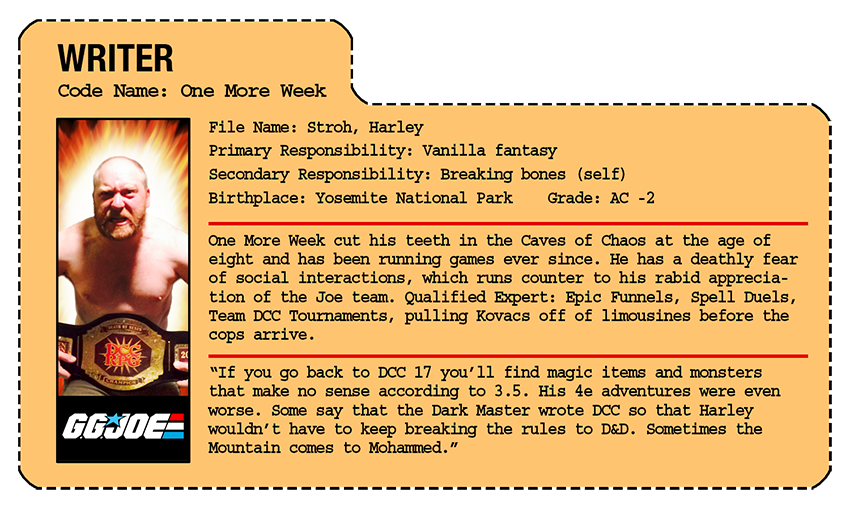
Robert E. Howard (Goodman Games): In honor of Robert E. Howard’s birthday, Goodman Games sat down with author Harley Stroh and asked about the influence REH had on Stroh’s adventure design and the DCC line.

WTF (Por Por Books): After the release of their very successful song ‘Calling Occupants of Interplanetary Craft‘ in the Fall of 1977, the Carpenters continued to mine the sci-fi craze of the late 1970s by participating in a May, 1978 special on ABC TV. Titled The Carpenters: Space Encounters, it was a melange of Carpenter’s hits, lip-synced, and accompanied by footage of dancers in ‘sci-fi’ costumes.
Games (Epic Nate): CGamer’s Samuel Horti recently interviewed Kurt Kuhlmann, Skyrim’s co-lead designer who left shortly after Starfield’s release. Kuhlmann states that he was originally slated to be The Elder Scrolls 6’s lead designer and laid out his vision for the game’s narrative.

Robert E. Howard (Grognardia): I could not permit the 120th anniversary of the birth of Robert Ervin Howard to pass without a comment, however brief. The problem is that, after all these years, what more could I possibly say about him, his work, and his legacy that others have not already said before and said better?
Games (Swords and Stitchery): This d100 table blends the atmospheric, weird-pulp horror of C.L. Moore’s Northwest Smith stories with the industrial, desperate sci-fi of The Red Room’s Orbital Decay. This blog entry picks right up from here on the blog.

Robert E. Howard (Texas Signal): It’s not uncommon for fictional characters to overshadow their creators, but few have done so the way Conan the Barbarian has his Texas author, Robert E. Howard. This is a shame because Conan has Texas deep in his DNA.
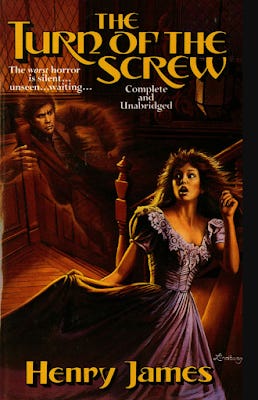
Fiction (Paperback Warrior): Henry James (1843-1916) authored a number of celebrated works, like The Wings of the Dove, The Golden Bowl, and The Ambassadors. However, his reputation is mostly synonymous with the ghost story The Turn of the Screw. The work was originally published in Collier’s Weekly in 1898, then reprinted in numerous formats as part of The Two Magics collection, The Aspern Papers, and stand-alone editions by a variety of publishers. Maintaining the novella’s relevancy are the endless adaptations.
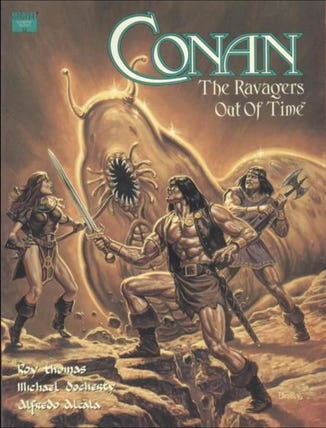
Comic Books (Conan Chronology): I tell you all this to set up Roy’s Marvel Graphic Novel output from 1992: The Ravagers Out of Time. The final Marvel Graphic Novel that Roy collaborated on, and actually the final MGN featuring Conan, Roy lets you know pretty quickly that we’re playing in his sandbox here. Most of the MGN Conan stories aren’t tied too directly to any existing Cimmerian stuff. You can assume they take place in the same universe as all the other late-20th-century Marvel comics, but they’re largely their own stories. Not The Ravagers Out of Time.
Robert E. Howard (The Silver Key): Thursday marks the 120th birthday of Robert E. Howard. For the occasion the Robert E. Howard Foundation has assembled an all-star cast of REH fans wishing Howard a happy birthday and reading a bit of his selected writings.
Fiction (DMR Books): About a week ago, Jake over at the PulpMortem Youtube channel uploaded a video review of A. Merritt’s Dwellers in the Mirage. I thought he did a good—but not perfect—job. So, I thought it would be helpful and informative to do a friendly fact-check of/reaction to his episode. Check out the video below to follow along at home.
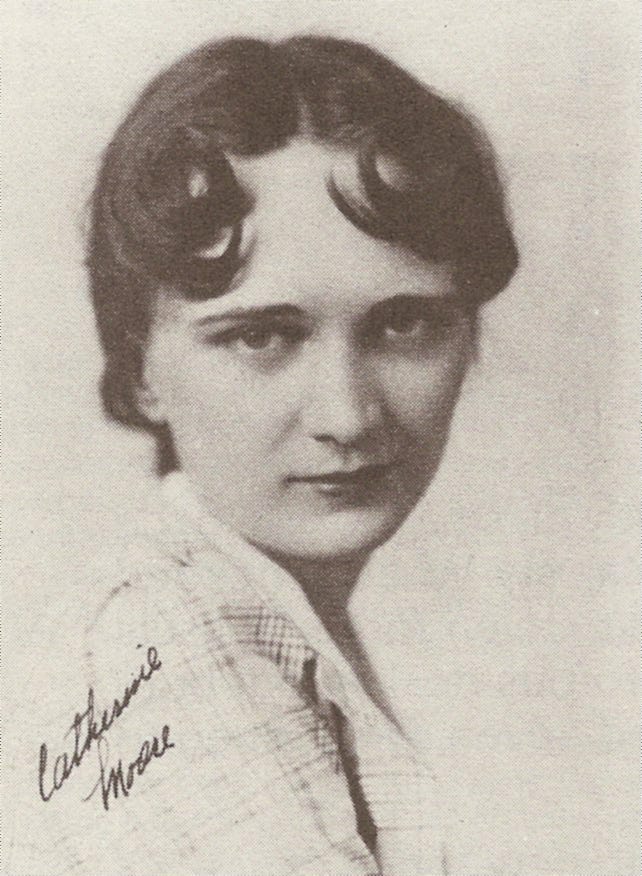
Authors (DMR Books): Today marks the one hundred and fifteenth birthday of Catherine Lucille “C.L.” Moore. Hailed as a ‘Grandmaster of Fantasy’ and also ‘The Queen of Sword and Sorcery’ by some, Moore contributed mightily to Weird Tales in the 1930s and then blazed trails in the sci-fi realm with her husband, Henry Kuttner. It’s been eight years since I did a C.L. Moore birthday post, so let’s get caught up on few things.
Horror (Tellers of Weird Tales): The phrase “cosmic horror” or “cosmic horrors” was in use as early as 1879, though not in the way scholars, fans, and readers of genre fiction use it today. That kind of meaning came later, perhaps around the turn of the nineteenth century, certainly by the pulp fiction era of the 1920s through the 1940s. I base all of this on an online search of newspaper articles from the nineteenth and twentieth centuries.
Events (Howard Days): Only Five Months until Howard Days! Yep, you read that correctly! Robert E. Howard Days in Cross Plains is only five months away! Here in NW Indiana we are battening down the hatches against Mother Nature’s furious wrath, all the while dreaming of the luxurious warmth provided to us as Howard Days attendees. It can’t show up soon enough!
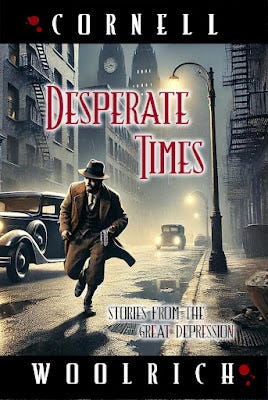
Pulp (Rough Edges): My recent reading of Cornell Woolrich’s MARIHUANA put me in the mood to read more of his work, which I’ve enjoyed for many years. My attention span hasn’t been very conducive to reading novels lately, but luckily there are a number of Woolrich collections available on Amazon, reprinting some of his shorter work from the pulps. DESPERATE TIMES: STORIES FROM THE GREAT DEPRESSION caught my eye, so I started there.
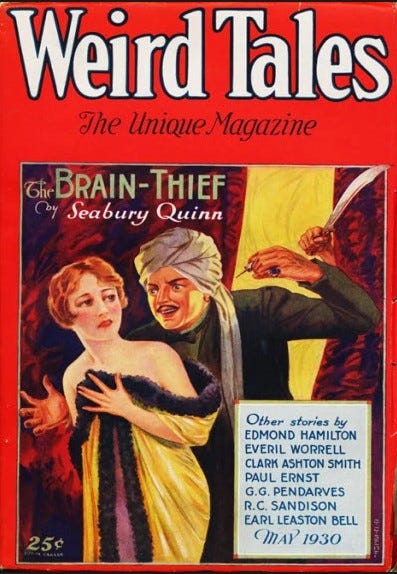
Clark Ashton Smith (Grognardia): When I was writing my three-part series on the worlds of Clark Ashton Smith, I realized that I had somehow never written a Pulp Fantasy Library post about “The End of the Story,” the very first tale of the Averoigne cycle, appearing in the May 1930 issue of Weird Tales. In retrospect, perhaps I shouldn’t have been so surprised. “The End of the Story” is frequently overlooked, probably because, unlike most other entries in the cycle, it is set not in the Middle Ages but in 1789, on the eve of the French Revolution.
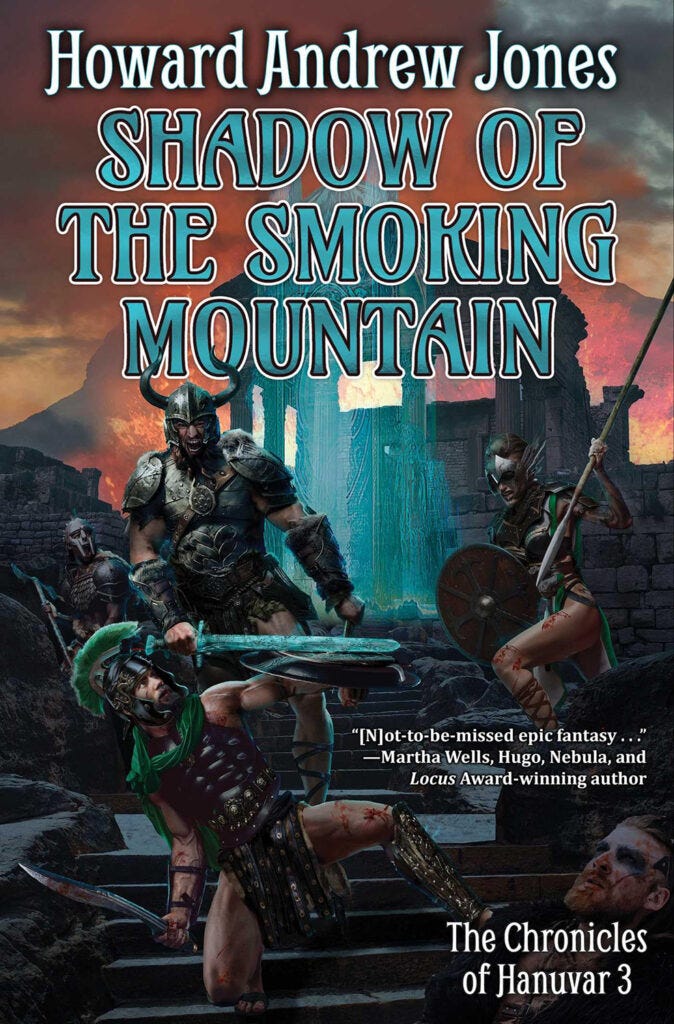
Fiction (Pulp Super Fan): While I am not a big sword-and-sorcery fan, I have enjoyed Howard Andrew Jones‘s first two Hanuvar books. It was planned to be a series of five volumes. I have reviewed The Lord of a Shattered Land and The City of Marble and Blood, and now move to the third: Shadow of the Smoking Mountain. Sadly, as I think many people know, Jones passed away in January 2025.
History (Celtic Source): The Imbolc Mystery: What Ancient Irish Sources Really Tell Us.
Mythos (Feuilleton): I said last week that I’d almost finished reworking my portrait of Tsathoggua for the Lovecraft book, and here it is. Tsathoggua first came into the world in a Hyperborea story by Clark Ashton Smith, The Tale of Satampra Zeiros, before being incorporated into the Cthulhu Mythos by HP Lovecraft who refers to the god-creature in several of his stories. Where Smith describes a hideous toad-like being, Lovecraft avoids being too closely bound by material specifics,